DEVELOPMENT POLICY AND NOT TAX EVASION

DEVELOPMENT POLICY AND NOT TAX EVASION

The imposition of new taxes and the increase in VAT rates reflect the failure of the government’s economic policy just one year after the elections.

The government’s inability to deal with government debt leads to a violation of Greece’s obligations as a member of the Eurozone, but also to a political cheating of its voters promising benefits, not new taxes, pre-election. Read More

THE EXPENSIVENESS, THE PARTISANSHIP AND THE NON-PARTICIPATION OF THE PEOPLE BRINGS THE REVOLUTION INTO POLITICAL SPEECH

THE EXPENSIVENESS, THE PARTISANSHIP AND THE NON-PARTICIPATION OF THE PEOPLE BRINGS THE REVOLUTION INTO POLITICAL SPEECH

In all societies where exploitation of human labor prevails and social injustice is manifest, protest ideas and tendencies of overthrowing the unwelcome social structure can be developed to build a fairer society. Such ideas of social upheaval have been manifested in the past and with the French Revolution (1789-95), and then. The New Leaders team will promote the idea that the political discourse they are proclaiming is a social necessity and will proceed to its organization in the coming season, with the anticipation or expectation that the pursuit of social justice is the pursuit of workers, retirees, borrowers, homeless . Read More

“MIGRATION POLICIES IN GREECE AND IN THE EUROPEAN UNION”

“MIGRATION POLICIES IN GREECE AND IN THE EUROPEAN UNION”

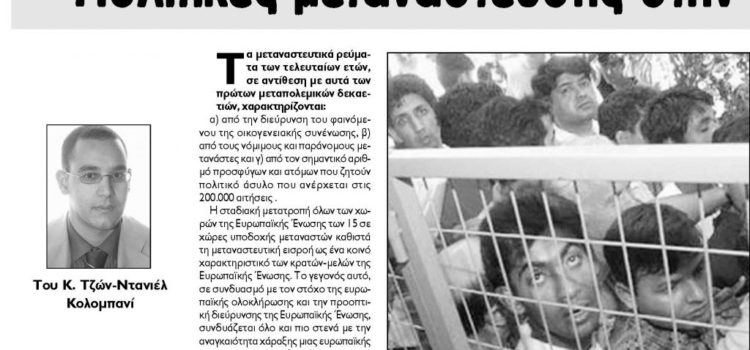
The migratory flows of recent years, as opposed to those of the first post-war decades, are characterized by:

  • the widening of family unity phenomenon, (b) legal and illegal migrants, and (c) the significant number of refugees and asylum-seekers, a number of applications that reaches the 200,000.

The gradual conversion of all 15 European Union countries into immigrant host countries makes migration a common feature of the Member States of the European Union. This, combined with the objective of European integration and the prospect of enlargement of the European Union, is increasingly combined with the need for a European immigration policy.

Immigration in the coming decades will continue to be a key factor in demographic developments, which will help to avoid a decline in the total population of Greece and the other countries of the European Union. Of course, such a prospect is linked to the development of the political socio-economic integration policies of immigrants. Nevertheless, it would be wrong to think that the migratory factor can in the long run meet the long-term needs of the economy in employment, since in such a case very high levels of immigration inflows are required. Read More

PROBLEMS OF THE TRAFFICKING SYSTEM FOR THE IDENTIFICATION, PROTECTION AND TRAINING OF VICTIMS

PROBLEMS OF THE TRAFFICKING SYSTEM FOR THE IDENTIFICATION, PROTECTION AND TRAINING OF VICTIMS

Until October 2002, Law 3064/2002 came into force on “Combating trafficking in human beings, crimes of sexual freedom, pornography of minors and generally the economic exploitation of sexual life and assistance to the victims of these acts” (Official Governmental Journal, issue A, article 248 / 15.10.2002) the legislative framework in force in Greece was inadequate as the illicit trafficking of human beings was not punished by case. However, the implementation of the law has created problems related to the recognition of victims and the public services they have to provide, according to the law, protection to victims.

Many victims do not know what trafficking is, they cannot describe themselves as a victim, and this lack of awareness of what happens to them in connection with their self-accusation and ignorance of their rights, results in their deportation without any protection from risks that are lurking at their return, their conviction for illegal entry into the country and / or illegal prostitution. Also, the fear of retaliation by their dealers is so great that it prevents many women from being trafficked.

Read More

ANTI-RACIST LEGISLATION OR COMMUNICATION LEGISLATION DRAFT?

ANTI-RACIST LEGISLATION OR COMMUNICATION LEGISLATION DRAFT?

Since I am not a civilian public functionary nor a party executive, my positions are purely personal and are based on the Constitution of Greece and the existing legislation!

To be simple, as Greek citizens, we already have our rights, freedom of religion and livelihood registered! The Constitution of Greece covers fundamental human rights (freedom of movement, circulation, religion, etc.)

Who and why (not) want the anti-racist proposed legislation draft?

There is a divide in Greek society over the last few days about the so-called “anti-racist legislation draft”. In the opinions and suggestions which are made, I did not see any particular logic, merely a partisan point of view, ideologies and obsessions with what is in force in the Constitution. The Constitution protects human rights and has clearly described legislation. Read More

Speech at the 1st Panhellenic Conference “Crisis Management in the Health Sector”

Migration Health: Legislative Framework and Action

Leaders of professional associations and public bodies, military officers, scientists, teachers, doctors, nurses,

I would like to thank the leadership of the Ministry of Health and congratulate the leaders who helped organize this very important conference in Greece of the crisis, and especially the Minister of Health Mr. Adonis Georgiades and the EKEPY Commander (Mr. Panos Efstathiou).

The health sector is characterized, on the one hand, by its significant prospects for growth, innovation and demonstration of dynamism and, on the other hand, by the challenges it faces in terms of the economic and social sustainability and efficiency of health care systems, due to the aging populations and of the progress made by medicine.

The sure thing is that our time is a period of inevitable movement of people to foreign countries, especially in the European Union, to find work and seek better living conditions.

The purpose of the work is the examination and presentation of the current situation regarding the health of immigrants. What are the needs for care? Are they satisfied? What problems do they encounter if they find solutions or are driven to quakes?  Are their rights to access to health protected by legislation? Within this framework, 6 thematic units are examined:

  • Equal access for immigrants to health services, which, in order to be thoroughly examined and presented without any loopholes, is dealt with by separate sections referring to the current legal framework, the right to health under the Constitution and the right to health under international law.
  • Protection of public health
  • Problems when entering the country
  • Hospitality and detention centers for Immigrants
  • Specific Issues, where this unit focuses on the rights of care for more vulnerable groups, such as women and children.
  • Deportation of Immigrants

Thank you very much for attending.


2013: THE EUROPEAN YEAR OF CITIZENS

2013: THE EUROPEAN YEAR OF CITIZENS

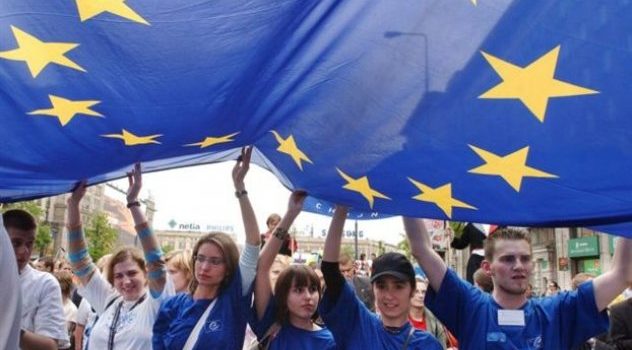
The Euro­pean Year of Cit­i­zens in 2013 will focus on the prac­ti­cal rights and advan­tages peo­ple gain from EU cit­i­zen­ship. Among many exam­ples are eas­ier travel, the abil­ity to live, work or study abroad, access to health­care sys­tems in other coun­tries and con­sumer protection.


 The year will be a chance for peo­ple to take part in events and sem­i­nars about how to fully exer­cise these rights – look­ing at obsta­cles encoun­tered and pos­si­ble solu­tions. There will also be dis­cus­sions around the con­ti­nent on EU poli­cies more gen­er­ally and the future of the Euro­pean Union.

A Euro­pean Year – every year since 1983

The very first Euro­pean Year, in 1983, was ded­i­cated to small busi­ness (“SMEs”) and craft indus­try. Every year since, the EU has cho­sen a spe­cific sub­ject to encour­age debate and dia­logue within and between Euro­pean countries.

Why Euro­pean Years?

The aim is to raise aware­ness of cer­tain top­ics, encour­age debate and change atti­tudes. Dur­ing many Euro­pean years, extra fund­ing is pro­vided for local, national and cross-border projects that address the Year’s spe­cial topic.

The Euro­pean Year can also send a strong com­mit­ment and polit­i­cal sig­nal from the EU insti­tu­tions and mem­ber gov­ern­ments that the sub­ject will be taken into con­sid­er­a­tion in future policy-making. In some cases, the Euro­pean Com­mis­sion may pro­pose new leg­is­la­tion on the theme.

How is the theme of a Euro­pean Year chosen?

It is pro­posed by the Com­mis­sion and adopted by the Euro­pean Par­lia­ment and EU mem­ber governments.

The top­ics are cho­sen sev­eral years in advance. They are always of gen­eral inter­est and major con­cern to both the EU insti­tu­tions and mem­ber coun­tries. Top­ics can be sub­mit­ted to the Com­mis­sion by mem­ber gov­ern­ments, civil soci­ety, busi­nesses, or any other stakeholders.

2013 is the Euro­pean Year of Cit­i­zens and it is ded­i­cated to the rights that come with EU cit­i­zen­ship. Over this year, dia­logue is encour­aged between all lev­els of gov­ern­ment, civil soci­ety and busi­ness at events and con­fer­ences around Europe to dis­cuss those EU rights and build a vision of how the EU should be in 2020.

My speech at the Egyptian Cultural Center “THE ROLE OF ARABIC JOURNALISM IN GREECE TODAY”

My speech at the Egyptian Cultural Center “THE ROLE OF ARABIC JOURNALISM IN GREECE TODAY”

Ladies and Gentlemen, good evening

Professional journalists of Arabic origin in Greece are measured in about 32, including technicians working in Greek media.

Despite the difficulties they face with Language and the different culture and tradition, they are struggling to collect valid information in order to reach the Information in the Arab world as well as in the Arab communities.

  • Topicality and Professionality:

The timeliness and changes in the Arab world, as well as the social and economic problems of these countries, directly affect the psychology of the journalist, as professional as he is.

Cultivating culture, dialogue, respect and tolerance among journalists and citizens and the authorities of the country give a basis of mutual respect and solidarity to the work they offer to society.

The journalist must treat the news with seriousness, professionalism and validity, without discrimination, nation, religion, color and ideology.

  • Role of journalists of Arabic origin in Greek media:

The coverage of the events from Greece to abroad is fully organized by the Arab correspondents, but the reverse coverage of those events from the Arab countries towards the Greek citizen is incomplete. In other European countries there are channels and radios from businessmen or professional journalists who work and sensitize their societies to the benefit of the Arab people, but unfortunately in Greece we do not see it.

Except of, the few interventions of Arab citizens in Greek media.

  • Arabic Forms and Electronic Media:

For 30 years there have been attempts by journalists or Arab citizens to establish a powerful tool to meet the needs of communities for information. However, due to the lack of support and funding, most of the efforts have failed, and at this point I would like to congratulate Mr Canafani on his efforts to continue his work in the middle of the social and economic crisis, as well as Mr Sasati who chose to continue using the new information technologies and the portal adifatan.

Finally, I would like to mention the great role of Arab youth in Greece through a social networking tool that provides immediate information to communities.